
What are the different uses of promotional products?
Promotional products are an often understated but very powerful advertising medium. So often buyers consider promo merch as a last-minute purchase, in fact, still over 80% of promotional merchandise is ordered and delivered within 10 working days, yet the average person keeps an item they value on average for up to 3 years. If you compare that with other advertising media and ask yourself how many TV, radio ads, and billboard posters you can remember?
So let’s examine how you can use promotional products…
General brand awareness
This is by far the biggest reason for using branded merchandise. When you are trying to create impact for your organisation, product, or service, promotional products should be a part of your marketing strategy. Remember to try to create a call to action on your merchandise, i.e., with a telephone number, web address, or landing page; this helps create some traceability too. A good idea is to equip the sales team with merchandise to give at customer visits to create or reinforce the brand message
Incentives
So you can use branded or plain merchandise as a reseller or dealer incentive. Some of these can be run on incentive and reward programs, for example, points based on purchases. This tends to be driven by higher value items like premium pens, higher value jackets, hampers, household, and sporting items that recipients would value
On-pack promotions
Look around the supermarket at Christmas, Easter, or during big events, and you will see a number of major brands use premiums to increase purchases. The drinks companies are famous for linking a free branded glass with larger packs. One of the best examples was the PG Tips monkey promotional packs, which included branded tea towels, monkey toys, and mugs, all in different packs. What was clever here is that not only did this increase sales, but those items would have remained with consumers as an enduring reminder of the brand. At Easter, you will find several Easter egg packs now with branded mugs. Ironically, it's the branded licensed mug that is the pester pulling power from children that helps create the purchase
Employee campaigns
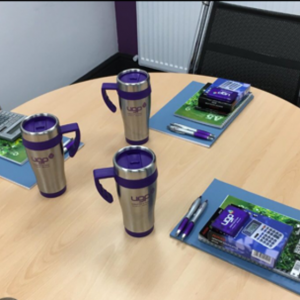
There are all sorts of opportunities to use branded merchandise in the workplace. For example, all new employees joining the organisation could be given an employee welcome pack. This could be a branded folder with all the requirements for their role, workplace rules, a branded pen, notebook, some confectionery, and a mug. Also, the HR department might want to create awareness for switching off lights (e.g., stickers) or a big ideas scheme, and merchandise is a great way of building this connection with employees. A lot of companies have branded uniforms and workwear to promote their organisation, giving it a professional image. If there are team away days, the social committee might be using branded clothing
Exhibitions and conference
This is also another use of promotional products. Lots of exhibitors use cool and useful promotional items to stop visitors and create a reason to engage as well as a more physical reminder. A lot of the time when you’ve visited an exhibition, so often you will have meant to follow up with all the people you met but the day job gets in the way, and often you see brochures stacked up or still left in the bag. However a branded mug, is unlikely to be thrown away, in fact more likely to be used straight away. Typical gifts used at exhibitions would be lanyards, water, pens, mugs, branded toys, stress products, eco friendly water bottles, sweets, powerbanks, usb sticks, bags and of course branded polo/T shirts for team members
Cause awareness
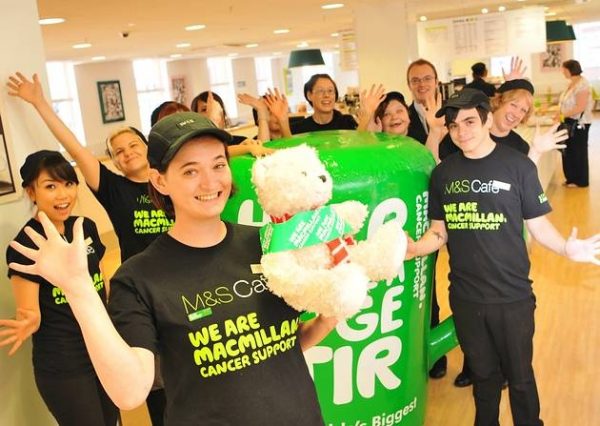
This is different from just branding, as this is related to a specific cause, maybe a charity wants to create a powerful message, and merchandise can be used by charity volunteers, but it can also be used as a valuable revenue stream for the sector. More lately, we have seen branded merchandise in particular for awareness weeks or days, an example would be the Macmillan Coffee morning, which raises millions for cancer research. If you look at some of the big marches, often the messages are picked up in the media by those wearing branded T-shirts. Unions also use branded merchandise to create awareness for their causes, particularly on political issues.
New branch openings or new product launches
Merchandise is a great way to build a connection with journalists and key media if you have a new brand launch, but also if you are opening a new retail store, you might be using balloons and having staff wear T-shirts.
Direct mail
If you are sending a catalogue to your customers, it's a good idea to provide a branded gift with it so that your clients and prospects have a regular reminder of what you do. So often catalogues are put on shelves or put away from the desk, but a pen, ruler, penpot holder, mousemat, mug, and calendar will remain front of mind. Another good idea is to send a new welcome pack to your newest customers, that way other staff members also see your brand, as so often it's not just one person who is the connection for you.
Awards and recognition
Whether it's customers or employees, branded merchandise can be used in recognition, for example, employee of the month or salesperson of the year. Examples of different types of recognition could be personalised plaques, trophies, and pin badges. Merchandise can also be used for long service awards too, these are then to be higher in value, for example, a Mont Blanc or a Scheaffer pen